Look, the time is near. The Son of Man is being betrayed into the hands of sinners…
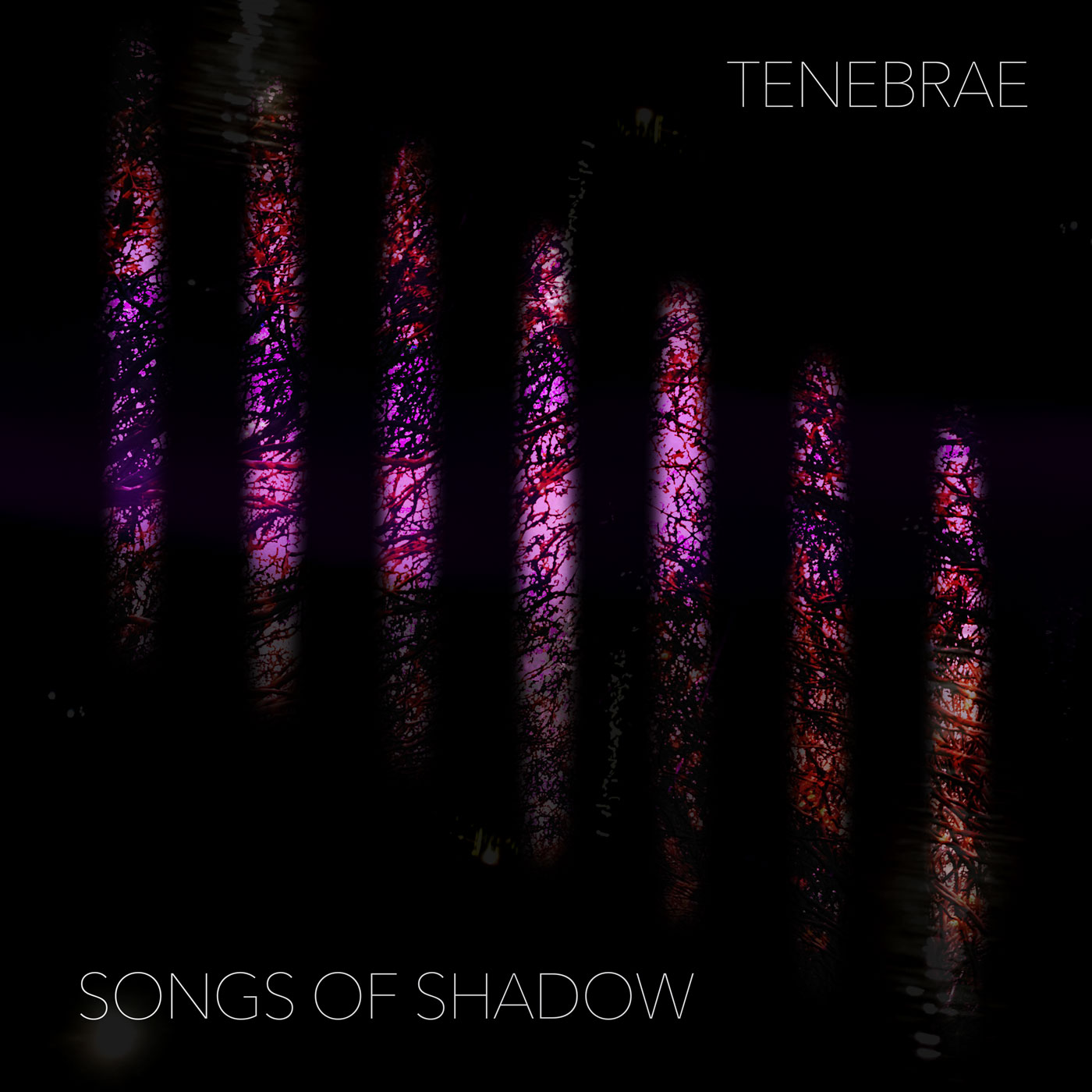
I haven’t really written a lot of music lately. I haven’t written a lot of anything, honestly. It’s been a stressful season of life. But this past year, at our church’s Tenebrae service, I found myself even more affected by the scripture than usual. The invitation to not just slow down but STOP… to put everything aside and breathe in sadness, sit in despair, embrace grief and loss…
It hit different this year when I myself was in a season of loss.
I went home and started writing out notes and ideas for this album that day. Over the course of the next several months, I’d find myself drawn to the idea, needing to find myself in that state again.
So I wrote out all of the seven traditional scriptures of Tenebrae. And I meditated on them. And as I did so, I found myself hearing things. Not songs. Tones. Vibes. Layers of feeling translated to music.
And then I started making the sounds in my head real.
These are those sounds. They’re songs but they have no melodies. They have no sung words. The words are printed for you to read alongside the music. The tracks are long on purpose. You can re-read the scriptures over and over while the tracks run. Meditate on them. Internalize them.
This is the story of loss and grief that precedes the greatest joy the world has yet known. The shadow that proves the light. The night before the inevitable dawn.
But first? We have to sit in the dark.
What is Tenebrae?
Tenebrae is a Christian service for Holy Week (the week leading up to Easter) shaped around darkness, silence, and the slow extinguishing of light. Its name means “darkness” or “shadows,” and that is the atmosphere it creates. The darkness isn’t a spectacle, but as a place of waiting. A place where all the easy answers have gone quiet.
The service usually unfolds through Scripture readings, prayers, music, and long stretches of stillness. Candles are extinguished one by one as the story moves toward Christ’s betrayal, suffering, and death. With each disappearing flame, the space changes. Faces become less distinct. The edges of the room disappear into shadow. What began as a family gathering gradually feels more intimate, almost solitary, even when many people are present.
Tenebrae should feel unhurried.
It isn’t meant to rush us toward Easter morning or soften the weight of Good Friday. Instead, it asks us to sit with grief for a little while. To resist the instinct to explain it, solve it, or turn it too quickly into hope.Tenebrae makes room for sorrow, doubt, abandonment, and the strange silence that follows loss. It reminds us that faith does not always arrive as certainty. Sometimes it looks like staying put after the lights have been turned off and everyone has gone home.
Stillness is the heart of Tenebrae. It should feel spacious rather than empty, heavy without being hopeless. The congregation is often invited to leave without conversation, carrying the stillness out into the night. There is no bright dismissal, no tidy conclusion.
The story of redemption is parked in shadow.
Tenebrae is grief. It’s loss. It’s sadness. But Tenebrae is not despair. Somewhere beneath the darkness is the memory of light. Even when the final candle is snuffed, its absence draws our attention to what we are longing for. The service trusts that hope survives death.
Tenebrae invites us to sit with grief instead of turning away from it. To listen. To wait.
To let the darkness tell the truth and to discover that darkness, however deep, is not the end.
Shadow of Betrayal
Matthew 26:20-25
When evening came, He was reclining at the table with the Twelve. While they were eating, He said, “I assure you: One of you will betray Me.” Deeply distressed, each one began to say to Him, “Surely not I, Lord?” He replied, “The one who dipped his hand with Me in the bowl—he will betray Me. The Son of Man will go just as it is written about Him, but woe to that man by whom the Son of Man is betrayed! It would have been better for that man if he had not been born.”
Then Judas, His betrayer, replied, “Surely not I, Rabbi?” “You have said it,” He told him.
Track Notes
KEY: C Major
We start this meditation with a comfortable and natural key and a slow, peaceful pace. It’s sad but not overly so. Jesus knew what was coming and mourned the necessity but he accepted it and was not afraid.
Shadow of Gethsemane
Matthew 26:36-50
Then Jesus came with them to a place called Gethsemane, and He told the disciples, “Sit here while I go over there and pray.” Taking along Peter and the two sons of Zebedee, He began to be sorrowful and deeply distressed. Then He said to them, “My soul is swallowed up in sorrow—to the point of death. Remain here and stay awake with Me.”
Going a little farther, He fell facedown and prayed, “My Father! If it is possible, let this cup pass from Me. Yet not as I will, but as You will.” Then He came to the disciples and found them sleeping. He asked Peter, “So, couldn’t you stay awake with Me one hour? Stay awake and pray, so that you won’t enter into temptation. The spirit is willing, but the flesh is weak.”
Again, a second time, He went away and prayed, “My Father, if this cannot pass unless I drink it, Your will be done.” And He came again and found them sleeping, because they could not keep their eyes open. After leaving them, He went away again and prayed a third time, saying the same thing once more. Then He came to the disciples and said to them, “Are you still sleeping and resting? Look, the time is near. The Son of Man is being betrayed into the hands of sinners. Get up; let’s go! See, My betrayer is near.”
While He was still speaking, Judas, one of the Twelve, suddenly arrived. A large mob, with swords and clubs, was with him from the chief priests and elders of the people. His betrayer had given them a sign: “The One I kiss, He’s the One; arrest Him!” So he went right up to Jesus and said, “Greetings, Rabbi!” and kissed Him. “Friend,” Jesus asked him, “why have you come?” Then they came up, took hold of Jesus, and arrested Him.
Track Notes
KEY: Eb Minor
Eb minor is a common key for lullabies. The 6/8 time signature gives it a little bit of a gentle swing. The chord progression rides the line between calm acceptance and deep sadness at the failure and betrayal of his friends and ends on a dark and final ringing of the piano; foreshadowing events to come.
Shadow of Denial
Matthew 26:69-75
Now Peter was sitting outside in the courtyard. A servant approached him and she said, “You were with Jesus the Galilean too.” But he denied it in front of everyone: “I don’t know what you’re talking about!”
When he had gone out to the gateway, another woman saw him and told those who were there, “This man was with Jesus the Nazarene!” And again he denied it with an oath, “I don’t know the man!”
After a little while those standing there approached and said to Peter, “You certainly are one of them, since even your accent gives you away.” Then he started to curse and to swear with an oath, “I do not know the man!” Immediately a rooster crowed, and Peter remembered the words Jesus had spoken, “Before the rooster crows, you will deny Me three times.”
And he went outside and wept bitterly.
Track Notes
KEY: D Minor
This is such a bleak passage. I kept coming back to that phrase “and he went outside and wept bitterly.” I can’t imagine how Peter felt in this moment with everything crumbling around him, accused and in danger of going to the cross himself, and then denying that he even knew Jesus and, in doing so, betraying everything he stood for and believed in.
Shadow of Accusation
Matthew 27:11-29
Now Jesus stood before the governor. “Are You the King of the Jews?” the governor asked Him. Jesus answered, “You have said it.” And while He was being accused by the chief priests and elders, He didn’t answer. Then Pilate said to Him, “Don’t You hear how much they are testifying against You?” But He didn’t answer him on even one charge, so that the governor was greatly amazed.
At the festival the governor’s custom was to release to the crowd a prisoner they wanted. At that time they had a notorious prisoner called Barabbas. So when they had gathered together, Pilate said to them, “Who is it you want me to release for you—Barabbas, or Jesus who is called Messiah?” For he knew they had handed Him over because of envy.
While he was sitting on the judge’s bench, his wife sent word to him, “Have nothing to do with that righteous man, for today I’ve suffered terribly in a dream because of Him!” The chief priests and the elders, however, persuaded the crowds to ask for Barabbas and to execute Jesus. The governor asked them, “Which of the two do you want me to release for you?” “Barabbas!” they answered. Pilate asked them, “What should I do then with Jesus, who is called Messiah?” They all answered, “Crucify Him!” Then he said, “Why? What has He done wrong?” But they kept shouting, “Crucify Him!” all the more.
When Pilate saw that he was getting nowhere, but that a riot was starting instead, he took some water, washed his hands in front of the crowd, and said, “I am innocent of this man’s blood. See to it yourselves!” All the people answered, “His blood be on us and on our children!” Then he released Barabbas to them. But after having Jesus flogged, he handed Him over to be crucified.
Then the governor’s soldiers took Jesus into headquarters and gathered the whole company around Him. They stripped Him and dressed Him in a scarlet military robe. They twisted together a crown of thorns, put it on His head, and placed a reed in His right hand. And they knelt down before Him and mocked Him: “Hail, King of the Jews!”
Track Notes
KEY: A Minor
This is an angry track. Throbbing with malice. For the first time we have something close to a rhythmic element reminiscent of a funeral march. There’s a lot of back and forth in this mix, with elements fighting each other and bouncing back and forth between the left and right. It’s designed to evoke an angry debate trailing off to a single pounding note.
Shadow of Crucifixion
Matthew 27:31-43
When they had mocked Him, they stripped Him of the robe, put His clothes on Him, and led Him away to crucify Him. As they were going out, they found a Cyrenian man named Simon. They forced this man to carry His cross.
When they came to a place called Golgotha (which means Skull Place), they gave Him wine mixed with gall to drink. But when He tasted it, He would not drink it.
After crucifying Him they divided His clothes by casting lots. Then they sat down and were guarding Him there. Above His head they put up the charge against Him in writing: THIS IS JESUS THE KING OF THE JEWS. Then two criminals were crucified with Him, one on the right and one on the left.
Those who passed by were yelling insults at Him, shaking their heads and saying, “The One who would demolish the sanctuary and rebuild it in three days, save Yourself! If You are the Son of God, come down from the cross!” In the same way the chief priests, with the scribes and elders, mocked Him and said, “He saved others, but He cannot save Himself! He is the King of Israel! Let Him come down now from the cross, and we will believe in Him. He has put His trust in God; let God rescue Him now—if He wants Him! For He said, ‘I am God’s Son.’
Track Notes
KEY: C# Minor
Not only is this song in C# minor, which is arguably the most awkward key, it’s in 7/8 time which always feels like it’s stumbling over its own feet to get somewhere. The two together are just uncomfortable. There are a few moment where it feels like I just might resolve to a more comfortable key… and then it doesn’t, leaving us hanging instead.
The constant pounding of the piano measures the hours that Christ spent on the cross in torment, sounds of tearing evoking his torture before the cross. The throb of the sub bass evoking a heartbeat that just… trails off…
Shadow of Death
Matthew 27:45-54
From noon until three in the afternoon darkness came over the whole land. About three in the afternoon Jesus cried out with a loud voice, “Elí, Elí, lemá sabachtháni?” that is, “My God, My God, why have You forsaken Me?”
When some of those standing there heard this, they said, “He’s calling for Elijah!” Immediately one of them ran and got a sponge, filled it with sour wine, fixed it on a reed, and offered Him a drink. But the rest said, “Let’s see if Elijah comes to save Him!”
Jesus shouted again with a loud voice and gave up His spirit. Suddenly, the curtain of the sanctuary was split in two from top to bottom; the earth quaked and the rocks were split. The tombs were also opened and many bodies of the saints who had fallen asleep were raised. And they came out of the tombs after His resurrection, entered the holy city, and appeared to many.
When the centurion and those with him, who were guarding Jesus, saw the earthquake and the things that had happened, they were terrified and said, “This man really was God’s Son!”
Track Notes
KEY: C Major
We find ourselves back in the natural, comfortable, calm key of C Major. There are 33 tolls of the bell. One for every year Jesus lived.
It’s a dark track but there is peace here. For the first time, we have voices and horns. It is finished. The work is done. There’s a feeling of loss and finality with the horns giving just a hint of victory to come.
Shadow of Burial
John 19:38-42
After this, Joseph of Arimathea, who was a disciple of Jesus—but secretly because of his fear of the Jews—asked Pilate that he might remove Jesus’ body. Pilate gave him permission, so he came and took His body away. Nicodemus (who had previously come to Him at night) also came, bringing a mixture of about 75 pounds of myrrh and aloes.
Then they took Jesus’ body and wrapped it in linen cloths with the aromatic spices, according to the burial custom of the Jews. There was a garden in the place where He was crucified. A new tomb was in the garden; no one had yet been placed in it. They placed Jesus there because of the Jewish preparation and since the tomb was nearby.
Track Notes
KEY: F Major
To me, F is the unfinished key. It never feels like it resolves. It’s always just… waiting for something.
This track is primarily a long, low drone with very little variation. It feels empty. Hollow. And it goes on for an uncomfortable length of time, giving us time to sit in the bleakness of loss.
Final thoughts…
I wouldn’t say that this was a fun album to make. I don’t think I can sit in this much sadness and call it fun. But it was really good for me. Taking the time to stop and really meditate on scripture, internalize it, and then translate that to music was, in a very real way, transformative.
I hope, as you listen to these tracks and read these scriptures, you also internalize them. That you feel what it must have felt like to be Christ facing his execution. His sadness, his grief, his resolve, his love. That you can resonate with what it must have felt like to be his disciples as they watched the man in whom they’d put all their faith be tried as a criminal, tortured, and murdered in front of their eyes. Their fear, their confusion, their doubt, their grief…
I hope it’s transformative for you, too.
We live in a culture where people turn away from pain and try to medicate it with dopamine hits. Where they try to speed-run grief. Where they work really hard to ignore the ugly parts of being a human and only present the perfect version of life in the hopes that it will become true.
But scripture invites us over and over again to sit in the grief. To look fear in the eyes. To mourn our losses and, even more, to mourn with others. God makes it clear that these are integral parts of life and to skip them is to live a half-life. A shallow life. A fake life.
These shadows prove the light. Sometimes, you need to sit in the dark. But, when the night passes, the dawn is so much more beautiful.

Leave A Comment